Source Sheer Embroidered Curtain Fabric for Home Hotel Cafe
Compare 27 listings of sheer embroidered curtain fabric from verified suppliers. Buyers can review specifications like width, material, and customization options for home, hotel, hospital, and cafe applications.
Key considerations
Products List


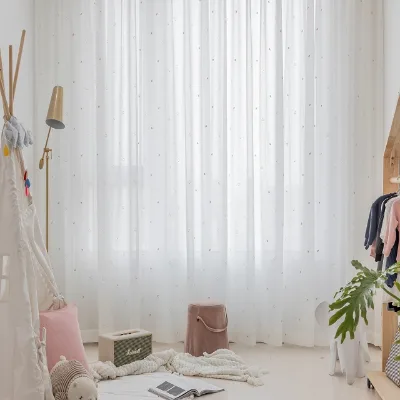


Comprehensive Sourcing Guide
Strategic Sourcing Guide for Sheer Embroidered Curtain Fabric
Procuring sheer embroidered curtain fabric requires a nuanced understanding of textile construction, aesthetic consistency, and supply chain reliability. For buyers in the home textile, hospitality, and interior design sectors, the intersection of sheer transparency and intricate embroidery presents unique challenges. The material must balance light filtration with structural integrity, ensuring that the delicate nature of the sheer base does not compromise the durability of the embroidered patterns. This guide outlines the critical factors for sourcing this specific category, grounded in observed market data and technical specifications relevant to the global trade of window treatments.
Technical Specifications and Material Composition
The foundation of any successful procurement of sheer embroidered curtain fabric lies in verifying the material composition and physical dimensions. Based on current market observations, the primary material for this category is 100% polyester. This synthetic fiber is preferred for its durability, resistance to shrinking, and ability to hold intricate embroidery without fraying. The standard weight for these fabrics typically ranges between 80 and 100 GSM (grams per square meter). This weight range is critical; a fabric lighter than 80 GSM may be too fragile for heavy embroidery, while a fabric heavier than 100 GSM may lose the desired "sheer" quality that allows light to pass through.
Width is another paramount specification. The market data indicates a standard width of 110 inches for many high-volume production runs, which is ideal for large window treatments in commercial settings like hotels and hospitals. However, buyers must also be aware of alternative widths, such as 55 inches, which are often used for smaller applications or specific regional requirements. The fabric construction is predominantly woven, utilizing techniques that integrate the embroidery directly into the weave or apply it as a secondary process. The opacity is consistently observed as "sheer," meaning the fabric is translucent rather than opaque. This characteristic is essential for applications requiring privacy without sacrificing natural light.
When evaluating technical specifications, buyers should verify the pattern type. While "embroidered" is the defining feature, the underlying fabric pattern can vary. Some listings indicate a "plain" or "solid" base, while others feature specific designs such as "grape" motifs or "feather" embroidery. The distinction between the base fabric and the embroidery design is vital for matching the aesthetic intent of the project. Additionally, the production model codes, such as FHCS885, Codigo40, or HS2012, serve as unique identifiers for specific fabric batches. These codes help in maintaining consistency across large orders, ensuring that the fabric sourced today matches the fabric ordered six months later.
Compliance, Certification, and Quality Standards
In the B2B textile sector, compliance and certification are not merely formalities but essential safeguards against liability and quality failures. For sheer embroidered curtain fabric, the supply chain must adhere to recognized international standards. The market data highlights ISO9001 as a relevant certification, indicating that the manufacturer has a quality management system in place to ensure consistent production processes. This certification is particularly important for buyers supplying large hospitality chains or government projects where traceability and process control are mandatory.
Beyond quality management, specific product standards regarding material composition and safety must be verified. The observed standard of 100% polyester with a weight of 80-100 GSM and a width of 110 inches serves as a baseline for technical compliance. However, buyers should also investigate SGS certification, which is noted in the product data. SGS testing typically covers physical properties such as tensile strength, colorfastness, and dimensional stability. For sheer fabrics, colorfastness is a critical metric, as the light transmission can make fading more apparent.
When evaluating suppliers, buyers should request documentation proving that the embroidery thread and the base fabric meet fire safety regulations, particularly for applications in hotels, hospitals, and cafes. While specific fire ratings are not explicitly listed in the provided data, the presence of ISO9001 suggests a structured approach to quality assurance. Buyers must verify that the "Good" quality rating observed in listings is backed by third-party test results rather than subjective supplier claims. It is also essential to confirm that the fabric is free from harmful substances, adhering to REACH or similar regional regulations depending on the destination market.
Cost Drivers and Pricing Dynamics
The pricing of sheer embroidered curtain fabric is influenced by a complex interplay of material costs, labor intensity, and order volume. The observed price range in the market spans from $0.06 to $10.78 per unit, a significant variance that reflects differences in embroidery complexity, fabric weight, and order quantity. The lower end of the spectrum typically corresponds to simpler embroidery patterns, smaller widths, or bulk orders with high Minimum Order Quantities (MOQ). Conversely, the higher price points are associated with intricate designs like feather or grape motifs, custom specifications, and smaller batch sizes.
MOQ is a primary cost driver in this sector. The observed MOQ range is extensive, spanning from 1 to 15,000 units. For buyers with small to medium requirements, the ability to source low MOQs is crucial for testing the market or fulfilling niche projects. However, larger orders often benefit from economies of scale, reducing the per-unit cost significantly. Buyers should be aware that custom embroidery designs often incur setup fees or higher MOQs to justify the machine programming and thread changes required.
Another factor influencing cost is the packing method. The market offers options such as "Fabric Roll Packing" or custom requests. Specialized packing, such as individual units with hangtags and color inserts, adds to the logistical cost but enhances the product's readiness for retail or direct installation. Buyers must factor these packaging requirements into their total landed cost calculations. Additionally, the origin of the product, primarily China and specifically the Shaoxing region, impacts pricing due to local labor costs and supply chain efficiencies. Shaoxing is a known hub for textile manufacturing, which often allows for competitive pricing, but buyers should verify current logistics costs and lead times associated with this region.
Typical Applications and Usage Scenarios
Sheer embroidered curtain fabric is versatile, finding applications across residential, commercial, and institutional sectors. The primary usage categories identified include home, hotel, hospital, cafe, and outdoor environments. In residential settings, these fabrics are used to create an elegant, light-filled atmosphere. The sheer quality allows for privacy during the day while maintaining a connection to the outdoors, and the embroidery adds a touch of sophistication that plain sheers lack.
In the hospitality industry, such as hotels and cafes, the fabric serves both aesthetic and functional purposes. The durability of 100% polyester makes it suitable for high-traffic areas where curtains are frequently opened and closed. The "sheer" attribute is particularly valued in hotel lobbies and guest rooms where natural light is desired to reduce energy consumption. The embroidery adds a layer of luxury that aligns with the branding of high-end establishments.
For healthcare facilities like hospitals, the fabric must meet strict hygiene and safety standards. The smooth surface of polyester is easier to clean than natural fibers, and the sheer nature allows for better visibility and light distribution in patient rooms. The usage data also mentions "outdoors," suggesting that some variants of this fabric are treated for weather resistance, although buyers should verify UV stability and water resistance claims before specifying them for exterior applications. The "Home Textile" classification further broadens the scope to include drapery, valances, and decorative accents in various interior design projects.
Supplier Evaluation and Sourcing Strategy
Selecting the right supplier for sheer embroidered curtain fabric requires a rigorous evaluation process. Buyers should prioritize suppliers who demonstrate transparency in their production capabilities and quality control measures. The presence of specific product models, such as FHE868 or 20210523CF02, indicates a structured product line, which is a positive sign of a mature manufacturing operation. Buyers should verify that the supplier can consistently produce the specific width and weight required, as deviations can lead to installation issues or aesthetic mismatches.
When evaluating suppliers, it is essential to check their customization capabilities. The market data confirms that customization is available, allowing buyers to request specific patterns, widths, or packing methods. However, buyers must ensure that the supplier has the technical capacity to execute these customizations without compromising the fabric's integrity. For instance, adding heavy embroidery to a sheer base requires precise tension control to prevent warping or tearing.
Lead times and location are also critical factors. The primary production origin is China, with specific hubs like Shaoxing. Buyers should confirm the lead times for both standard and custom orders, as embroidery processes can extend production schedules. The observed stock status is "No," suggesting that most orders are made-to-order. This implies that buyers need to plan their procurement timeline carefully to avoid delays. Additionally, buyers should assess the supplier's communication responsiveness and their ability to provide samples for quality verification before committing to large orders.
Quality Control and Long-Term Procurement Considerations
Maintaining quality control throughout the procurement lifecycle is essential for sheer embroidered curtain fabric. Buyers should implement a multi-stage inspection process, starting with raw material verification, moving to in-process checks during embroidery, and concluding with final product inspection. The "Good" quality rating observed in listings is a starting point, but it must be validated through physical inspection of samples. Key quality metrics include the consistency of the embroidery stitch, the alignment of the pattern, and the absence of loose threads or fabric defects.
For long-term procurement, buyers should focus on building relationships with suppliers who offer consistent quality and reliable delivery. The availability of specific product codes and standards suggests that suppliers with established production lines are better positioned to meet long-term needs. Buyers should also consider the environmental impact of their sourcing decisions, looking for suppliers who adhere to sustainable manufacturing practices.
Packaging plays a significant role in preserving quality during transit. The option for "Fabric Roll Packing" or custom packing with hangtags and color inserts should be selected based on the end-use requirements. Proper packaging prevents creasing, dust accumulation, and damage to the delicate embroidery. Finally, buyers should establish clear communication channels for handling any quality issues that arise post-delivery, ensuring that the supplier is responsive to claims and willing to rectify defects. By adhering to these quality control measures and strategic considerations, buyers can secure a reliable supply of high-quality sheer embroidered curtain fabric that meets their specific project requirements.
FAQs
What material is used for sheer embroidered curtain fabric?
The primary material is 100% polyester, chosen for its durability and resistance to shrinking. This synthetic fiber holds intricate embroidery well while maintaining the sheer quality required for light filtration in home and hotel settings.
Which certifications should buyers verify for this fabric?
Buyers should verify ISO9001 certification to ensure consistent quality management processes. Additionally, SGS testing is often available to confirm physical properties like colorfastness and tensile strength for safety and durability compliance.
How wide is the standard sheer embroidered curtain fabric?
The standard width for many high-volume production runs is 110 inches, ideal for large commercial windows. Alternative widths like 55 inches are also available for smaller applications or specific regional requirements.
Can buyers request custom embroidery designs for this fabric?
Yes, customization is available for specific patterns, widths, and packing methods. However, custom designs may require higher minimum order quantities to justify the machine programming and thread changes needed for execution.
What is the typical weight range for this sheer fabric?
The typical weight ranges between 80 and 100 GSM to balance light filtration with structural integrity. Fabrics lighter than 80 GSM may be too fragile, while heavier options might lose the desired sheer transparency.
Where is the main production origin for this curtain fabric?
The main production origin is China, with specific manufacturing hubs located in the Shaoxing region. This location offers competitive pricing due to local labor costs and established textile supply chain efficiencies.